We built a brand for Lydia Millen, not an audience
Back in 2022, we ran a small experiment as part of how we approach brand strategy.
At the time, we were getting a lot of pushback from clients around defining their ideal client too specifically.
We’d hear things like:
“Most of my customers are women, but I don’t want to put men off.”
“I don’t want to limit myself.”
Or, in one case, “We didn’t even do this when I worked at Topshop.”
That one really stuck with us.
Topshop is a huge, established brand with hundreds of product lines and a global audience, but even then, it still speaks to a very specific type of person. It’s not marketing to everyone equally. The challenge is, when you’re a smaller business, especially one launching with a focused range or a clear point of view, that level of clarity becomes even more important, not less.
We saw this with a clothing brand we were working on at the time. The collection itself was clearly suited to a certain type of person. The styling, the cuts, even the references all pointed in one direction, but there was hesitation around fully committing to that.
The same thing comes up in other industries too. We’ve worked with interior designers who are open to taking on any style of project, but struggle to define their own aesthetic clearly, and while that flexibility can feel like an advantage, it often makes the brand harder to recognise.
So we decided to test the opposite approach.


The experiment
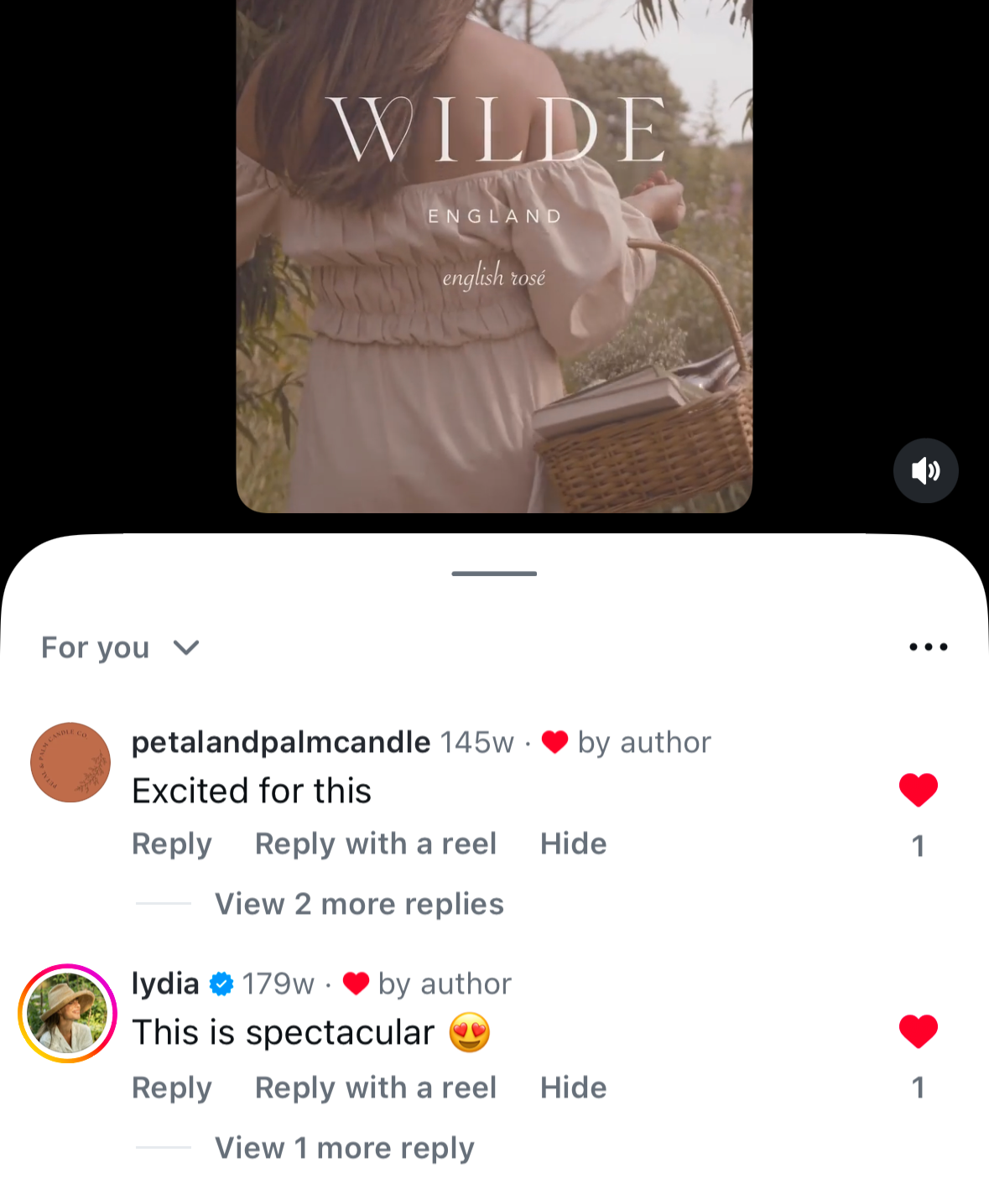
We created a brand that didn’t exist.
No client, no brief, no constraints. Just complete creative freedom, but instead of designing it for a broad audience, we built it around one very specific person. Lydia Millen.
She wasn’t chosen as a “target market”, but as a lens. She has a very clear and considered sense of style. She doesn’t buy into everything, and she’s quite intentional in what she chooses to engage with. There’s a strong thread through her content, whether that’s countryside living, English heritage, gardening, or the overall aesthetic she gravitates towards.
It made her a useful reference point and every decision became easier.
We knew what direction the typography should take.
We knew the tone of the visuals.
We knew the kind of campaign that would resonate.
Even when we made choices that weren’t directly aligned with her preferences, like not using green despite it being one of her favourite colours, it was still a considered decision within a clear framework. There was no second-guessing and no trying to balance opposing ideas.
What happened next
We launched the brand quietly.
It didn’t take long for her to find it. She followed the account and engaged with the post.
At the same time, the project became one of our best performing pieces of content organically. It generated a level of engagement we hadn’t seen in a while, and it even made us consider whether it could exist as a real brand.
But more importantly, it confirmed something we’d been trying to articulate in our strategy work.
What it actually proved
This wasn’t about building a brand for one person.
It was about removing the grey area. When you try to appeal to everyone, you start to question every decision:
Will this put someone off?
Should we make this more neutral?
Is this too specific?
And over time, that softens the brand. When you have a clear point of view, everything becomes more defined. The brand feels more cohesive, more intentional, and ultimately more recognisable.
It doesn’t exclude people. It gives the right people something to recognise themselves in.
How this shows up in our work now
Interestingly, we did adjust how we approach ideal client work after this. Not because the thinking changed, but because the language needed to.
Some clients didn’t respond well to the idea of naming a specific person, even though the principle behind it was sound.
So now, we often approach it through traits instead:
lifestyle
buying behaviour
values
aesthetic preferences
But the intention is the same. We’re still looking for clarity, just expressed in a way that feels more natural for the client.
A final thought
We still see this hesitation come up. The concern that being too specific will limit opportunities. That narrowing the focus will reduce reach, but more often than not, the opposite is true.
We recently saw a piece of content that highlighted this perfectly. One version spoke to a very niche problem and reached millions of people. The other was broader and more generic, and it didn’t land in the same way.
The specificity is what made it resonate.
And if we’re honest, it’s something we still have to remind ourselves of too.
It’s always harder to apply this level of clarity when you’re close to your own business.